

130 Years of XJTU · Bound to the Nanyang
The Xi'an Jiaotong University Singapore Nanyang Alumni Association is a shared home for all XJTU alumni living in Singapore, for current students, and for teachers who have served at our alma mater. It brings together Jiaotong people from every generation and every discipline, drawn here by a common bond with the university: to carry on its finest traditions — diligence in study, firmness of purpose, resolution in action, and conscientiousness in service — and to move forward together, and grow, in a country that is not home.
As early as the 1990s, XJTU alumni in Singapore were already organising activities of their own, meeting regularly and keeping one another informed; those gatherings became a support for one another's lives and careers. In 2016, the year of the university's 120th anniversary, Singapore's Jiaotong alumni held a large gathering on 28 August — recalling teachers and classmates, renewing old friendships and talking about their lives in Singapore — and it was from there that preparations for the association's registration as a legal entity formally began. After a year of work, the Xi'an Jiaotong University Singapore Nanyang Alumni Association was registered with the Registry of Societies on 2 October 2017: a milestone that brought the Jiaotong community here into a new stage of institutional and sustainable development.
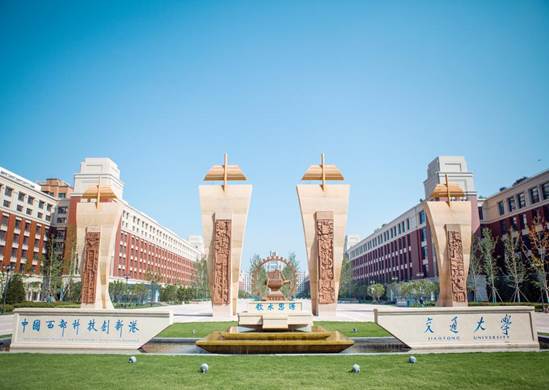
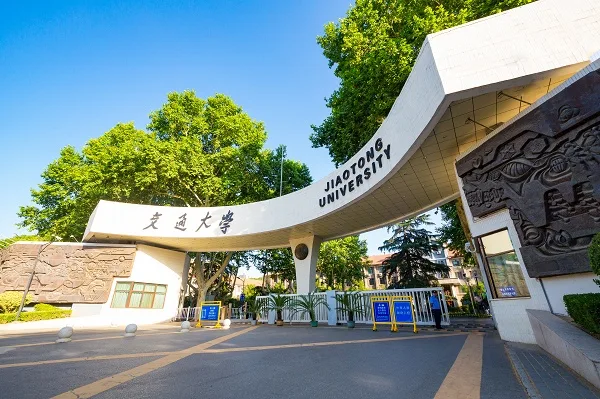
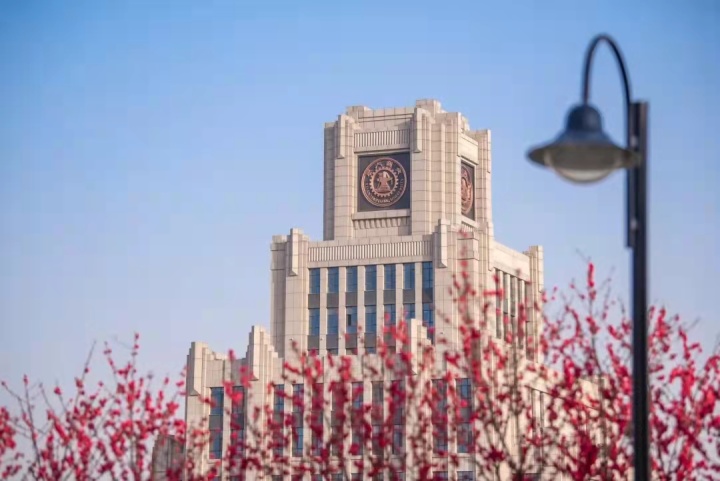
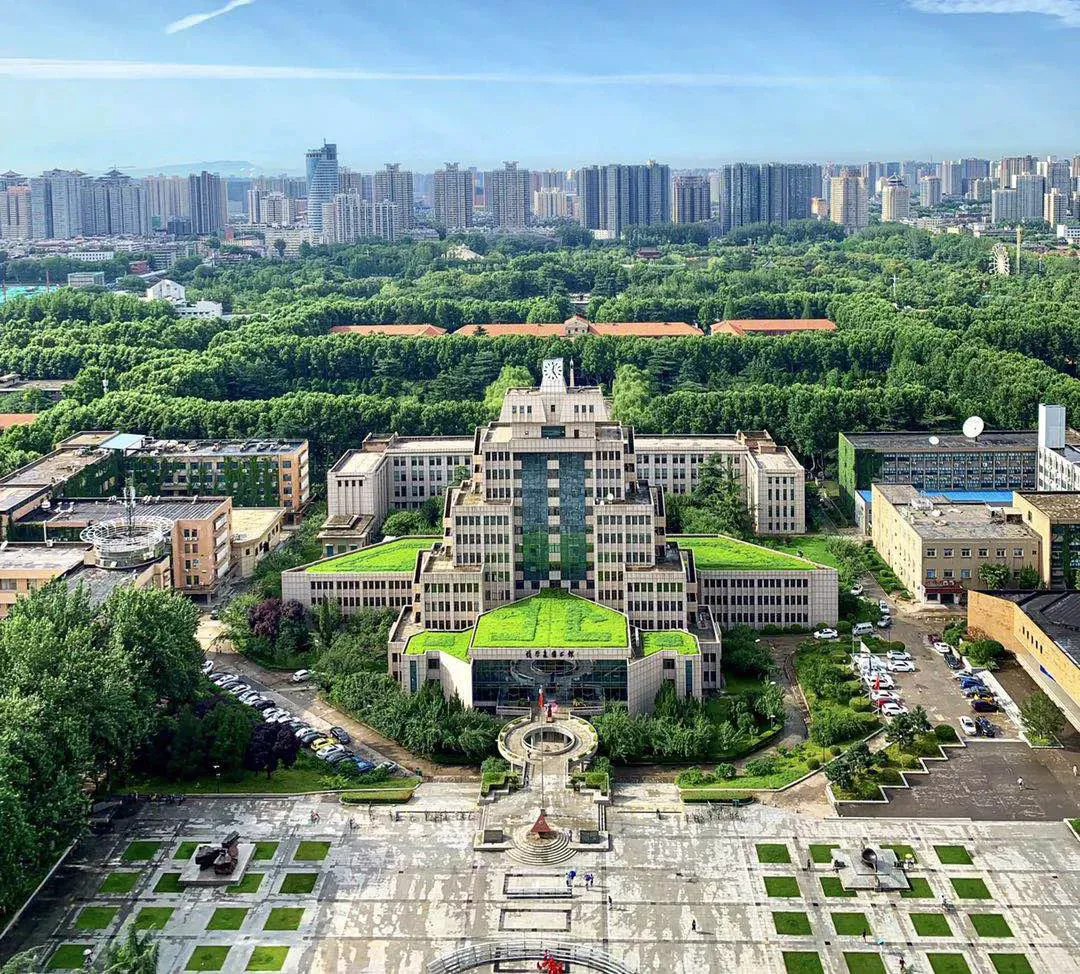
As alumni numbers grew and its activities widened, the association developed a sound organisational structure and way of running. On 9 October 2025 it completed a fresh organisational design and revised its constitution; on 28 March 2026 it held the election of its new council and moved into new premises at Kaki Bukit, strengthening its day-to-day management and its service to alumni. At the same time it began preparing for the university's 130th anniversary, answering the university's call and building a closer bridge for exchange and cooperation between Singapore and the alma mater. This phase of reorganisation and renewal marked a new height in the association's development.
The association holds to its purpose — bringing alumni closer, promoting exchange and cooperation, and serving the community — and works to give alumni in Singapore a warm, open and efficient platform for meeting one another. By connecting alumni and their resources, it creates conditions and opportunities for members' careers, research and ventures in Singapore, helps them settle more fully into Singaporean life, and keeps them close to their alma mater. It also works for deeper interaction among alumni, and between alumni and the university, promoting academic and research cooperation and exploring new technology, new thinking and new opportunities together.
As a lively organisation, the association runs a varied programme of events — academic talks and career development talks, festive gatherings, sports competitions, cultural performances and charity work — rich in content and combining learning, enjoyment and a sense of belonging. Every gathering carries alumni friendships forward and passes on the spirit of the alma mater. The association also takes an active part in exchange and cooperation with the federation of Chinese university alumni associations in Singapore and with the alumni bodies of sister universities, contributing Jiaotong people's wisdom and strength in education, science and technology, culture, and the common good.
Joining the Xi'an Jiaotong University Singapore Nanyang Alumni Association makes you part of the Jiaotong network in Singapore. The association brings together outstanding alumni from every field: here you can make new friends and meet old classmates again, and share workplace experience, academic work and reflections on life. You will have the chance to take part in talks, events and anniversary celebrations, and to keep up with news and resources from the university and from XJTU alumni organisations worldwide. Your participation and support, in turn, help the association serve everyone better, and help the university and its alumni grow together.
130 years of XJTU, bound to the Nanyang. The Xi'an Jiaotong University Singapore Nanyang Alumni Association welcomes every Jiaotong person in Singapore to join us — to carry on the spirit of our alma mater and the Jiaotong bond together, and to let the feeling behind remembering our source take root here and shine anew.
Council Members 2026 - 2028
- 会长
- 黄 晖博士2000级博
- 副会长
- 温长云教授1979级本
- 胡 忠先生1982级本
- 王光武先生1990级本硕
- 李新刚先生1991级本
- 丁 燕女士2002级本
- 秘书长
- 时晓明先生1992级本硕
- 副秘书长
- 高 博博士2008级本
- 理事
- 李宏群博士1977级本硕博
- 张 亮博士1995级本硕
- 关志远先生1997级本
- 李存本博士1998级本
- 王 斌先生1999级本
- 张 莎女士2011级本
- 陈 立先生2017级本
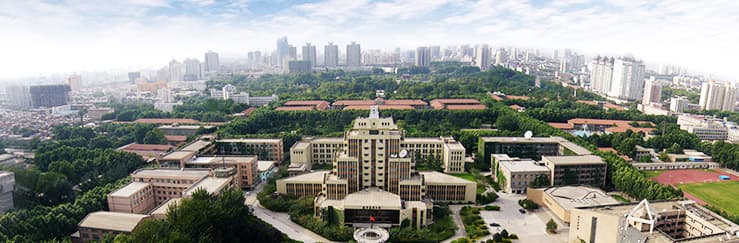
Xi'an Jiaotong University is one of China's earliest institutions of higher learning, renowned at home and abroad, and a key university directly under the Ministry of Education. Since its relocation west, generation after generation of Jiaotong people have taken root in western China and served the nation, making outstanding contributions to the development of the west and to national construction, and giving practical form to the spirit of moving west — the first such spirit to be included in the Chinese Communists' spiritual lineage. In December 2017, General Secretary Xi Jinping gave important instructions in response to a letter from 15 senior professors of the university. In his 2018 New Year address, General Secretary Xi Jinping again mentioned 'the old professors of Xi'an Jiaotong University who moved west'. On 22 April 2020, General Secretary Xi Jinping visited the university and delivered an important speech, stressing that the core of the spirit of moving west is patriotism and its essence is following the Party's command and heeding its call, sharing one breath and one fate with the Party and the nation, and with the people; he encouraged teachers and students to create, in the new era, historic achievements belonging to our generation. On 7 April 2026, on the occasion of the 130th anniversary of the founding of Jiaotong University, General Secretary Xi Jinping replied to a letter from all the teachers and students of the four Jiaotong universities, stressing the need to carry forward and promote the spirit of moving west, to focus on the nation's major strategic needs, and to make new contributions to building a strong country in education, in science and technology, and in talent. This gave the university's teachers and students great care and immense encouragement, and provided fundamental guidance and a course of action for its efforts in the new era to build a world-class university with Chinese characteristics.
At the end of the nineteenth century, China's defeat in the First Sino-Japanese War left the nation in peril. Sheng Xuanhuai, a prominent modern industrialist and educator, held to the conviction that 'self-strengthening begins with the nurturing of talent, and the nurturing of talent begins with education', and founded Nanyang Public School in Shanghai in 1896; in 1921 it was named Jiaotong University. The university held to the purpose of 'seeking practical learning and promoting practical enterprise', and to the aim of 'cultivating first-rate character, pursuing first-rate scholarship, building first-rate enterprises, and becoming first-rate talent'. By the 1920s and 1930s it had become a renowned university distinguished by its strength in science, engineering and management. During the War of Resistance, the university moved into the foreign concessions and relocated inland to Chongqing, maintaining teaching in both Shanghai and Chongqing; to resist foreign aggression, many students laid down their pens and took up arms, fighting and dying on the battlefield. On the eve of Liberation, teachers and students threw themselves into the democratic revolution and the struggle for liberation, and the university became known as a 'fortress of democracy'.
In 1955 the central government decided that Jiaotong University should move inland to Xi'an; from 1956 teachers and students relocated to Xi'an in batches; in 1957 the university was divided into a Xi'an part and a Shanghai part under unified leadership; and in 1959 the Xi'an part was named Xi'an Jiaotong University and listed that year as one of the sixteen key universities in the country. In 2000 the State Council decided to merge Xi'an Jiaotong University, Xi'an Medical University and Shaanxi Institute of Finance and Economics into a new Xi'an Jiaotong University.
The university was a key construction unit in the Seventh and Eighth Five-Year Plans, and was among the first group of universities in the national 'Project 211' and 'Project 985'. In 2017 it was selected for Category A of the national first-class university construction list, and in 2022 for the second round of the national 'Double First-Class' initiative, with 8 disciplines selected as national 'Double First-Class' disciplines and 12 as Shaanxi provincial 'Double First-Class' disciplines. According to ESI data released in January 2026, 19 of the university's disciplines rank among the world's top 1% of academic institutions, 6 among the top 1 per mille, and Engineering among the top one in ten thousand, ranking 7th in the world.
The university is a comprehensive research university spanning 11 disciplinary fields — science, engineering, medicine, economics, management, humanities, law, philosophy, art, education and interdisciplinary studies — with 36 schools (departments and centres), 11 undergraduate residential colleges and 3 directly affiliated hospitals. It has 6938 staff on its establishment, of whom 3971 are full-time teachers. Among the faculty, 747 have been selected for national talent programmes of various kinds, including academicians and National Science Fund for Distinguished Young Scholars; 53 have been recognised as national-level innovation teams; 415 are experts who have made outstanding contributions to the country and receive special government allowances; and 13 are national-level teaching masters.
The university has 65559 students: 25595 undergraduates, 35480 postgraduate students and 4484 international students from 128 countries and regions. It offers 77 undergraduate programmes, and has 45 first-level disciplines authorised to confer doctoral degrees, 45 authorised to confer master's degrees, 10 professional doctoral degree programmes, 32 professional master's degree programmes, 34 postdoctoral mobile stations, 8 national first-level key disciplines, 8 national second-level key disciplines and 3 national key (cultivated) disciplines. The university currently has 265 bases at provincial/ministerial level or above, including 11 national (state) key laboratories, 1 major national science and technology infrastructure, 1 'Belt and Road' joint national laboratory, 10 national engineering (technology) research centres, 3 national industry-education integration innovation platforms, 5 international science and technology cooperation bases of the Ministry of Science and Technology, 1 philosophy and social sciences laboratory of the Ministry of Education, and 1 national-level foreign-related rule-of-law base.
In the 130 years since its founding, the university has formed the fine traditions of promoting education to strengthen the nation, of pioneering through hard work, of honouring virtue and prizing substance, and of rigorous scholarship, together with an educational character that starts high, builds a broad foundation, demands much and values practice. It has produced a great number of outstanding statesmen, scientists, social activists, educators, entrepreneurs, artists and medical experts, among them Cai E, Zhang Yuanji, Cai Yuanpei, Huang Yanpei, Shao Lizi, Li Shutong, Zou Taofen, Lu Dingyi, Qian Xuesen, Zhang Guangdou, Wang Daohan, Wu Wenjun, Yang Jiachi, Xu Guangxian, Yao Tongbin, Chen Nengkuan, Jiang Zemin, Hou Zonglian, Huang Xuhua, Gu Songfen, Ding Guangen, Wu Ziliang, Jiang Xinsong, Jiang Zhenghua, Wang Xiji, Li Jinhua and Han Qide. Since its founding, more than 200 XJTU alumni have been elected academicians of the two national academies; since the relocation west, 96 academicians have been trained by the university or have worked there. There have been 6 recipients of the 'Two Bombs, One Satellite' Meritorious Service Medal, 4 winners of the State Preeminent Science and Technology Award, 6 'Most Beautiful Strivers' of New China, 2 recipients of the Medal of the Republic and national honorary titles, and 5 National Outstanding Engineers. Since 2015, 190 people have won national science and technology awards, and 100 have been named national model workers, national advanced workers, or winners of the National May 1st Labour Medal.
The university has established a five-in-one education model — ideological and political guidance, character formation, transmission of knowledge, development of ability, and innovative thinking. It has built a talent-development model of 'general education plus broad professional education' and a continuous bachelor's-master's-doctoral pathway, and a professional talent-development model of deep industry-education integration. It has launched the Artificial Intelligence Pilot Programme in full, exploring new ways for artificial intelligence to empower teaching reform, and carries out the plan for training hundreds, thousands and tens of thousands of outstanding engineers. It breaks down disciplinary barriers and has set up a Frontier Science and Technology Interdisciplinary Centre, actively exploring new paths for training high-end talent and raising the quality of that training.
In 2006 the university adopted a dual model of residential colleges and schools, and was among the first in the country to explore one-stop student community management and services shaped by 'Party-building leadership, cultivation of both knowledge and conduct, teachers and students living together, and teaching according to aptitude'. In 2019 it was approved by the Ministry of Education as one of the first pilot universities for the one-stop student community management model, and in 2024 the 'Concentric Circles' ethnic-unity studio of that community was named a national model collective for ethnic unity and progress. The university has kept exploring the training of top innovative talent: it began enrolling students for its youth class in 1985, and later opened the Qian Xuesen Class, the Hou Zonglian Medical Experimental Class, the Artificial Intelligence Experimental Class, the Energy Storage Class and the 'Everest Plan' (a comprehensive-reform experimental class). With Qian Xuesen College as its vehicle, mathematics, physics, computer science, mechanics and basic medicine have been selected for the Ministry of Education's Plan 2.0 for training top students in basic disciplines, and the various experimental classes are built and run with the aim of producing industry leaders with a global outlook and the qualities of a scientist, applying Qian Xuesen's spirit and wisdom to teaching practice.
Sixty-one of the university's programmes have been selected as national first-class undergraduate programme construction points, and it has won 100 national teaching achievement awards. It has 12 pilot virtual teaching and research offices of the Ministry of Education, 166 national first-class undergraduate courses, 1 national textbook base, 8 national teaching (talent-training) bases, 12 national experimental teaching demonstration centres (including virtual simulation experimental teaching centres) and 9 national teaching teams, and has received 27 National Top 100 Outstanding Doctoral Dissertation Awards and 46 nominations.
Since 2000 the university has led several hundred major projects, including national science and technology major projects and national key research and development programmes, and has been granted 9450 projects by the National Natural Science Foundation of China, ranking among the country's leading universities in both the number of basic research projects and the funding for them. It has undertaken 67 national-level major social science research projects, won 45 humanities and social sciences awards of the Ministry of Education, and built 40 high-end think tanks with government and enterprises; a large number of its research results have been adopted and applied.
The university's medical education has developed rapidly. Guided by the needs of people's health, taking the building of a national medical centre as its opportunity and the development of new medical disciplines as its focus, and with medicine-engineering integration as its point of breakthrough, it is accelerating the integration of medicine with engineering, science and the humanities; of basic medicine with clinical medicine; of clinical medicine with preventive medicine; and of medical disciplines with other disciplines. It is speeding up frontier medical research and building a new medical education system with XJTU's own character and a demonstrative effect, promoting the high-quality development of its affiliated hospitals, achieving breakthroughs in medical disciplines, building first-class medical disciplines, and serving the building of a Healthy China.
In the new era, the university has moved to grasp the laws of world higher education and to adapt to the new round of scientific and technological revolution and industrial transformation. With the goal of being 'a bearer of the national mission, a global highland of science and education, an engine serving Shaanxi, a platform for innovation-driven development, and a demonstration of a smart learning town', it has created the China Western Science and Technology Innovation Harbour, building around the four fields of science, engineering, medicine and the humanities 8 major platforms, 30 research institutes and more than 400 research bases and think tanks. It is deepening the integration of teaching and research, interdisciplinary work, industry-education integration, collaborative education and joint research, and, by piloting first and demonstrating solutions, actively exploring new models, new forms and new experience for the deep integration of a modern university with social development in the twenty-first century, creating an innovation engine for the new pattern of western development in the new era.
The university holds to the 'four orientations' — the frontiers of world science and technology, the main economic battlefield, the nation's major needs, and people's life and health — and keeps strengthening its capacity for scientific and technological innovation. Since the relocation west it has created more than a hundred 'firsts' in scientific research at home and abroad, playing a leading role in seizing the heights of research. These include establishing China's first institute of engineering thermophysics; its first programmes in steam turbines, automobile manufacturing, refrigeration and cryogenics and compressors, and energy storage; developing China's first large general-purpose electronic computer and its first digital processing chip with independent intellectual property rights; and proposing the twin-shear unified strength theory, the first such theory in the world.
Since the relocation, the university has produced more than 30000 scientific research results, of which 252 have won one of the three major national awards, generating economic and social benefits counted in the hundreds of billions. Drawing on its strengths in disciplines and talent training, it has innovated its industry-university-research cooperation model, setting up joint research and development centres with government and with large and medium-sized enterprises, focusing on solving key technical problems in industry, and giving full play to the supporting role of science and technology in regional economic and social development.
Guided by the core socialist values, the university carries forward the spirit of moving west and implements in depth its strategy of strengthening the university through culture. Upholding both the humanities and the sciences, it has built a cultural framework of 'shaping the heart, cultivating conduct, portraying the image and creating the setting' and an all-round cultural education system, activating grassroots 'cultural cells' through 'culture plus', and fostering a political culture of integrity, an academic culture of seeking truth and innovation, and a generous and inclusive humanistic culture. It also builds distinctive cultures of sport, aesthetic education and labour, promoting students' all-round development in morality, intelligence, physique, aesthetics and labour. Cultural brands such as the 'Great Masters' drama series and the Golden Plane Tree Festival have won people's hearts. The university has been named a national civilised campus, an outstanding showcase in the national higher-education programme of 'honouring China's fine traditional culture', and one of the first bases for scientists' spirit education.
The university is deepening its 'Star Voyage', 'Ascent', 'Lead Goose' and 'Starry Sky' programmes, working to create an upgraded version of the one-stop student community and a university version of the 'Fengqiao experience'. It has a national base for cultural quality education for university students and 149 student societies, with a rich variety of scientific, artistic and sporting activities; 'Masters from Nine Regions', 'Discourses across the Four Seas', the 'New Harbour Report' and the 'Chuangyuan Forum' have become classic brands that broaden the horizons of teachers and students. Over the years XJTU students have won many honours in international and domestic competitions, among them the SAE International Aero Design competition, the VEX Robotics World Championship, the International Mathematical Contest in Modeling, the World Chinese Debating Championship, the International English Speaking Competition, the World University Architectural Design Competition, the World University Rowing Championship, the ACM International Collegiate Programming Contest, the China International College Students' Innovation Competition, the China Postgraduate Innovation and Practice Series Competitions, the 'Challenge Cup' National College Students' Extracurricular Academic and Scientific Works Competition, the 'Challenge Cup' China College Students' Entrepreneurship Plan Competition, the National College Students' Mathematical Modeling Contest, the National College Students' Mechanical Innovation Design Competition, the National College Students' Robot Competition (Robocon, Robomaster), the China College Students' Aircraft Design Innovation Competition, the Chinese College Students' Physics Academic Competition, the National Aerospace Model (Research Category) Championship, the National College Students' Energy Conservation, Emission Reduction and Social Practice Science and Technology Competition, the National College Students' Art Performance, and the National College Students' Network Culture Festival.
The university attaches great importance to international cooperation and exchange, upholding the tradition of being a light to the world and building a world-class university on Chinese soil. In recent years it has carried out a global campus plan, training top innovative talent with a global outlook through joint training, student exchange and other means. It cooperates deeply with world-class universities, continually exploring new models of cooperation, and has founded a number of Sino-foreign cooperative institutions and programmes, including Xi'an Jiaotong-Liverpool University and the XJTU-PoliMi Joint School. It has jointly established two Confucius Institutes with overseas universities: the Confucius Institute at the University of Liverpool in the United Kingdom, and the Confucius Institute at Yamanashi Gakuin University in Japan. Together with Samarkand State University in Uzbekistan it has built a 'China Centre', pioneering in Central Asia a 'language plus technology' model of innovation cooperation and setting a new example of all-round, multi-level cooperation between Chinese and Central Asian universities. Through overseas partner university days, lectures by renowned international scholars and the 'See the World at XJTU' English salon series, it fosters an international campus atmosphere. Serving the joint building of the Belt and Road, it initiated the University Alliance of the Silk Road, which has attracted 207 universities from 45 countries and regions to join and cooperate in diverse ways. It undertakes the building of the China-Shanghai Cooperation Organisation Centre for Higher Education Cooperation, hosts the Chinese Rectors' Office of the Shanghai Cooperation Organisation University, and leads the Shanghai Cooperation Organisation Countries Digital Education Alliance, serving the building of an SCO education community. It actively develops education for international students coming to China, and has established 147 bases for recruiting international undergraduates in 28 countries and regions. In 2024 the university passed the quality certification (re-certification) of higher education for international students in China with the highest A+ grade. It conducts international science and technology cooperation in an open and integrated way, contributing Chinese wisdom and Chinese solutions and making China's voice heard in solving major scientific problems of global concern.
The university has four campuses — Xingqing, Yanta, Qujiang and the China Western Science and Technology Innovation Harbour — covering about 5000 mu, with a total floor area of about 4 million square metres. On 4 May 1995, the Propaganda Department of the CPC Central Committee, after seeking instructions from the Central Committee, wrote back to Xi'an Jiaotong University agreeing that its library be named the Qian Xuesen Library. That same year Jiang Zemin, then General Secretary of the CPC Central Committee, President of the People's Republic of China and Chairman of the Central Military Commission, inscribed the library's name. The university library now consists of the Qian Xuesen Library on the Xingqing campus, the Yanta campus library, and the library and information centre at the Innovation Harbour, with a total floor area of 46069.82 square metres, 4674 reading seats, and study and discussion spaces meeting a variety of needs. Its collections are rich: more than 6.07 million volumes (items) in total, 146 platforms and about 355 sub-databases of Chinese and foreign electronic resources, more than 89000 Chinese and foreign full-text electronic journals, and more than 3.94 million Chinese and foreign e-books.
At this new historical starting point, the university will hold high the great banner of Xi Jinping Thought on Socialism with Chinese Characteristics for a New Era, fully implement the spirit of General Secretary Xi Jinping's important speeches on his visits to Shaanxi and to the university, keep in mind its mission of educating people for the Party and for the country, carry out the fundamental task of fostering virtue through education, hold the 'great ones of the nation' in its heart, carry forward the spirit of moving west, shoulder the national mission, jointly create Jiaotong's honour, and speed up the building of a world-class university with Chinese characteristics. With practical action it resolutely upholds the 'Two Establishments' and the 'Two Upholds', making greater contributions to building a strong nation and to the great cause of national rejuvenation.
校 训:精勤求学、敦笃励志、果毅力行、忠恕任事
校 风:爱国爱校、追求真理、勤奋踏实、艰苦朴素
办学定位:扎根西部、服务国家、世界一流